
María Izquierdo: pure art and mexicanidad
DOI:
https://doi.org/10.17230/co-herencia.15.29.1Keywords:
Mexican art, Mexican art, art for arts sake, art for art sake, nationalism, color theory, color theory, Mexican painter, Mexican painterAbstract
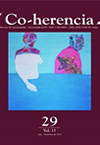
This essay presents and overview of the work of the Mexican painter María Izquierdo (1902-1955) and situates her images and ideas within the debates on the role of art in Mexican society between 1930 and 1940. During the first decade of her career, Izquierdo was tangentially affiliated with the avant-garde literary group known as Los contemporáneos (The Contemporaries), who advocated pure art. After 1939, the artist changed both the themes and style of her work and focused on mexicanidad, which brought her closer to some –though not all– of the ideas advocated by the muralists and other artists who shared their agenda. Throughout her career, Izquierdo created artworks that addressed gender issues and promoted a positive presence of women. Depictions of Izquierdo’s female protagonists contrast with those of the muralists, who usually gave women secondary roles.
Downloads
Published
Issue
Section
License
Attribution 4.0 International (CC BY 4.0)
You are free to:
- Share — copy and redistribute the material in any medium or format
- Adapt — remix, transform, and build upon the material for any purpose, even commercially.
The licensor cannot revoke these freedoms as long as you follow the license terms.
Under the following terms:
-
Attribution — You must give appropriate credit, provide a link to the license, and indicate if changes were made. You may do so in any reasonable manner, but not in any way that suggests the licensor endorses you or your use.
- No additional restrictions — You may not apply legal terms or technological measures that legally restrict others from doing anything the license permits.
Avisos:
- No tiene que cumplir con la licencia para elementos del material de dominio público o cuando su uso esté permitido por una excepción o limitación aplicable .
- No se dan garantías. Es posible que la licencia no le otorgue todos los permisos necesarios para el uso previsto. Por ejemplo, otros derechos como la publicidad, la privacidad o los derechos morales pueden limitar la forma en que utiliza el material.


 Revista de la Escuela de Artes y Humanidades, Universidad EAFIT.


