Image and Education: Constructing a View of the Past Through Photography
Main Article Content
Keywords
Visual education, Erika Diettes, Juan Manuel Echavarría, Photography, Conflict representation, Collective memory, Aesthetic experience, Violence, Colombia
Abstract
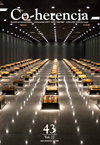
This article explores how certain visual constructions (photographs) can be understood as educational forms that challenge the ways of interpreting conflict and its consequences on individuals. To this end, it analyzes the strategies of interpellation in two aesthetic works: Río abajo by Erika Diettes and Silencios by Juan Manuel Echavarría. The text argues that these productions guide perception by transmitting forms of understanding based on the proximity to lived experience. These pieces invite usto imagine rather than to represent, as they seek to mobilize thought and deepen the construction of meaning, transcending the simplistic act of identifying a single interpretation.
Downloads
References
Arendt, H. (1979). Eichmann en Jerusalén. Un estudio sobre la banalidad del mal (C. Ribalta, Trad.). Lumen.
Arfuch, L. (2007). El espacio biográfico. Dilemas de la subjetividad contemporánea. FCE.
Barthes, R. (1982). La cámara lúcida. Nota sobre la fotografía (J. Sala-Sanahuja, Trad.). Gustavo Gili.
Benjamin, W. (1974). Pequeña historia de la fotografía. En Discursos interrumpidos I (pp. 15-41; J. Aguirre, Trad.). Taurus.
Borja Gómez, J. H. (2010). La pintura colonial y el control de los sentidos. Calle 14. Revista de investigación en el campo del arte, 4(5), 58-67. https://n9.cl/qfpb9.
Borja, J. H. (2012). Pintura y cultura barroca en la Nueva Granada. Los discursos sobre el cuerpo. Alcaldía de Bogotá; Fundación Gilberto Alzate Avendaño.
Butler, J. (2010). Frames of War. When Is Life Grievable? Verso.
Crary, J. (2008). Técnicas del observador. Visión y modernidad en el siglo XIX (F. López García, Trad.). CENDEAC.
Cruz, H. (2016). Erika Diettes y el arte de encontrar belleza en el dolor. El País. https://n9.cl/4ds6r.
Didi-Huberman, G. (1997). Lo que vemos, lo que nos mira (H. Pons, Trad.). Manantial.
Diettes, E. (s. f.). Río abajo, obra. https://erikadiettes.com/rioabajoobra.
Dussel, I. (2009). Escuela y cultura de la imagen: los nuevos desafíos. Nómadas, (30), 180-193. https://n9.cl/fcfbrh.
Echavarría, J. M. y Grisalez, F. (2025). Silencios. [Proyecto artístico. Mapa y fotografías anexas]. https://jmechavarria.com/en/work/silencios/.
Foster, H. (Ed.) (1988). Vision and Visuality. Bay Press.
Herrera, M. y Torres, A. (2023). El río como teatro de la memoria. Violencia política y expresiones estético-artísticas. En V. Olaya, F. Urrego y K. Díaz (Eds.), Visualidades y memorias de la violencia política. Perspectivas estéticas desde América Latina (pp. 117-126). Universidad Pedagógica Nacional y Universidad Distrital.
Lacan, J. (1984). El seminario. Libro 3. Las psicosis (1955-1956) (J. L. Delmont-Mauri y D. S. Rabinovich, Trads.). Paidós.
Laplanche, J. y Pontalis, J.-B. (2004). Diccionario de psicoanálisis (F. Gimeno Cervantes, Trad.). Paidós.
Loew, C. (2007). Portraits of presence: Excavating traumatic identity in contemporary Catalan testimonies. En F. Guerin & R. Hallas (Eds.), The Image and the Witness. Trauma, Memory and Visual Culture (pp. 23-36). Columbia University Press.
Olaya Gualteros, D. V. (2024). Fotografía, violencia política y formación de la mirada. [Tesis de Doctorado, Universidad Pedagógica Nacional]. https://n9.cl/d8u1b.
Plessner, H. (1970). Laughing and Crying. A Study of the Limits of Human Behavior (J. Spencer Churchill & M. Grene, Trads.). Northwestern University Press.
Runge Peña, A. K. y Garcés Gómez, J. F. (2011). Educabilidad, formación y antropología pedagógica: repensar la educabilidad a la luz de la tradición pedagógica alemana. Revista Científica Guillermo de Ockham, 9(2), 13-25. https://n9.cl/n447a.
Sekula, A. (1986). The Body and the Archive. October, (39), 3-64. https://n9.cl/21ivm.
Sontag, S. (2003). Ante el dolor de los demás (A. Major, Trad.). Alfaguara.
Uribe Alarcón, M. V. (2018). Antropología de la inhumanidad. Un ensayo interpretativo sobre el terror en Colombia. Universidad de los Andes.
Article Sidebar
Article Details

This work is licensed under a Creative Commons Attribution 4.0 International License.
Attribution 4.0 International (CC BY 4.0)
You are free to:
- Share — copy and redistribute the material in any medium or format
- Adapt — remix, transform, and build upon the material for any purpose, even commercially.
The licensor cannot revoke these freedoms as long as you follow the license terms.
Under the following terms:
-
Attribution — You must give appropriate credit, provide a link to the license, and indicate if changes were made. You may do so in any reasonable manner, but not in any way that suggests the licensor endorses you or your use.
- No additional restrictions — You may not apply legal terms or technological measures that legally restrict others from doing anything the license permits.
Avisos:
- No tiene que cumplir con la licencia para elementos del material de dominio público o cuando su uso esté permitido por una excepción o limitación aplicable .
- No se dan garantías. Es posible que la licencia no le otorgue todos los permisos necesarios para el uso previsto. Por ejemplo, otros derechos como la publicidad, la privacidad o los derechos morales pueden limitar la forma en que utiliza el material.